Thursday Jan 12th
The path comes in from Mauldeth Road West, just west of Princess Road where the Princess Hotel and its bowling green were where the flats and its car park are now.

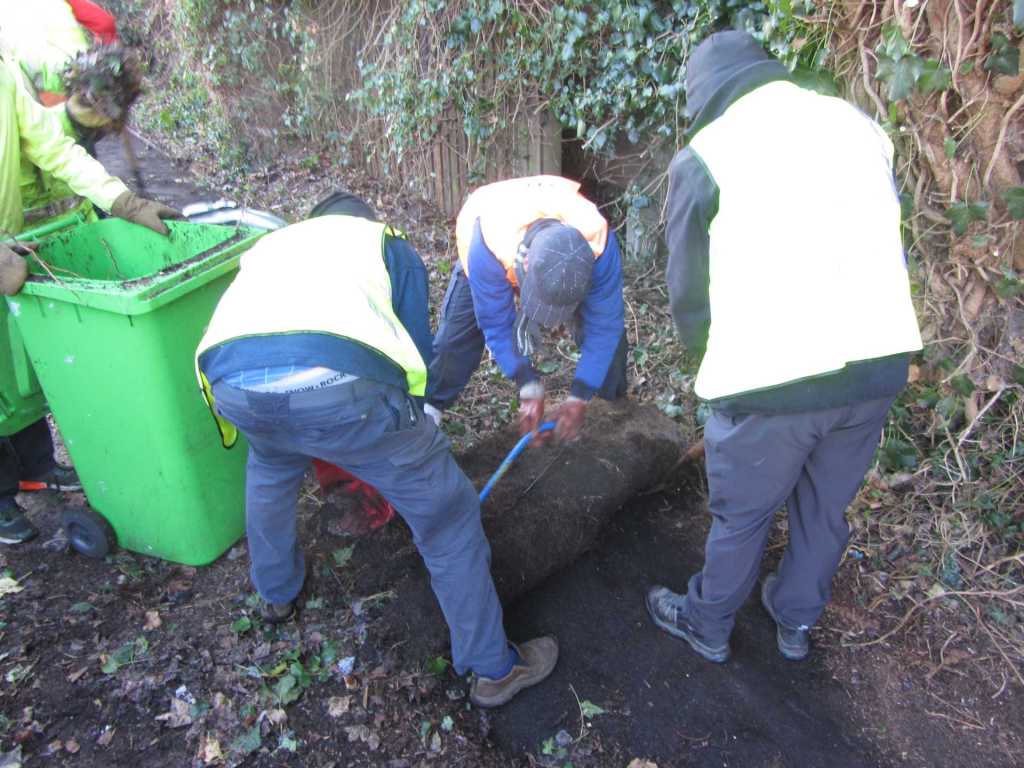
On 15th December our volunteers cleared this entrance path back to its original width, by cutting the higher growth and scraping up the ivy from the path surface.
Two thirds of passers-by expressed appreciation for what we did, with many shouts of “thank you” and “amazing”. Only one dissenter and I think that even they went away happy or at least placated.
Posted in Litter picking |
Without litter picking, much of the path and particularly entrances would become very littered in a fairly short space of time.
Fortunately, there are a good number of volunteers who are happy to do their bit to keep littering on the path to an acceptable level. Some of these volunteers belong to groups such as the Friends of the Fallowfield Loop or Sustrans (who manage the path) or a Scout Group. Others act on a purely individual basis and this is fine too. Everybody is welcome to join in, either on a regular basis, or just as a one-off. The following is intended to help those that want to get involved and are not sure how to make the first steps
Floop Litter Pickers Group
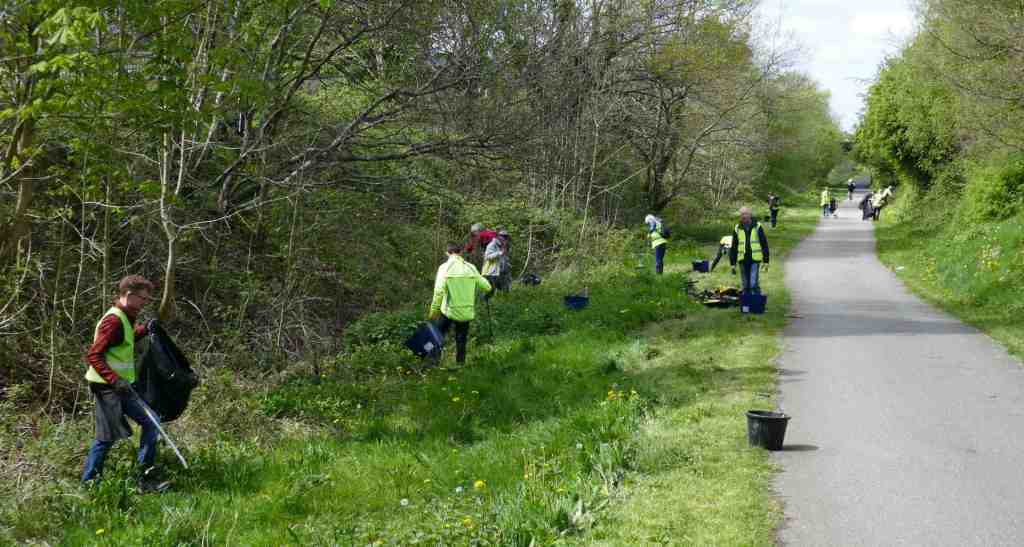
The Floop Litter Pickers was formed in autumn 2021 partly as a result of the pandemic when it made a lot of sense to split the path into sections and invite people to ‘adopt’ a section. (Prior to this, the only organised litter picking was done by a group meeting once per month and working on a different part of the path each time). To set up the Floop Litter Pickers, a number of volunteers were appointed as ‘Lead volunteers’ and they were provided with some basic equipment largely supplied by Manchester City Council and the Friends. It was left up to each one to decide when and how they would organise their litter picking. Most found others to assist them while others were already part of another group and could call on that group to assist them. The Floop Litter Pickers remain active today and most people seem to agree that based on the state of the path, the present set up is working well.
Probably the easiest way to get involved is to contact your local Lead volunteer.
| Start of section | Lead volunteer | Contact details |
|---|---|---|
| St Werburghs | Paul Hutton | phutton1968@gmail.com 07821 642445 |
| Withington Road | Julian Beach (Scouts) | julian@trink.co.uk 07973 382980 |
| Princess Road | Martin Rathfelder | marathfelder@ntlworld.com 07968 703740 |
| Yew Tree Road | Cath Dyson | dyson_catherine@hotmail.com |
| Sherwood Street | Charles Kinniburgh | charles.kinniburgh@gmail.com 07784 793363 |
| Sainsburys | Vincent Walsh | vincentwalsh@tiscali.co.uk 07588 335781 |
| Lindleywood Road | Dick Venes | rjvenes@waitrose.com 07749 421254 |
| Slade Lane | Pam Flynn | pamflynn@cooptel.co.uk 07848 008249 |
| Railway bridge before Quadrants | Cerri Horrocks | fabricake@rocketmail.com 07980 305760 |
| Railway bridge after Quadrants | Helen Nicholson | h.nicholson@mmu.ac.uk 07905 095016 |
| Nelstrop Bridleway | Charles Kinniburgh | charles.kinniburgh@gmail.com 07784 793363 |
| Station Road | Daniel Leaman | axhn55@gmail.com 07879 657461 |
| Ryderbrow Road/ Dean Road | Charles Kinniburgh | charles.kinniburgh@gmail.com 07784 793363 |
| Gorton Allotments | Ellen Maxwell | Ellengmaxwell@yahoo.com 07766 242038 |
| Wright Robinson | Paul Billington | BillLanc@yahoo.com 07767 057537 |
They will advise you on how to get hold of equipment (e.g. a litter picker, high viz jacket, gloves) and what to do with the bags of litter once collected. There is a natural turnover of lead volunteers and so we are always looking for new recruits. If you feel you would like to get involved in this way, please contact the co-ordinator: Charles Kinniburgh (charles.kinniburgh@gmail.com) 07784 793363
Schools, Scout Groups, etc
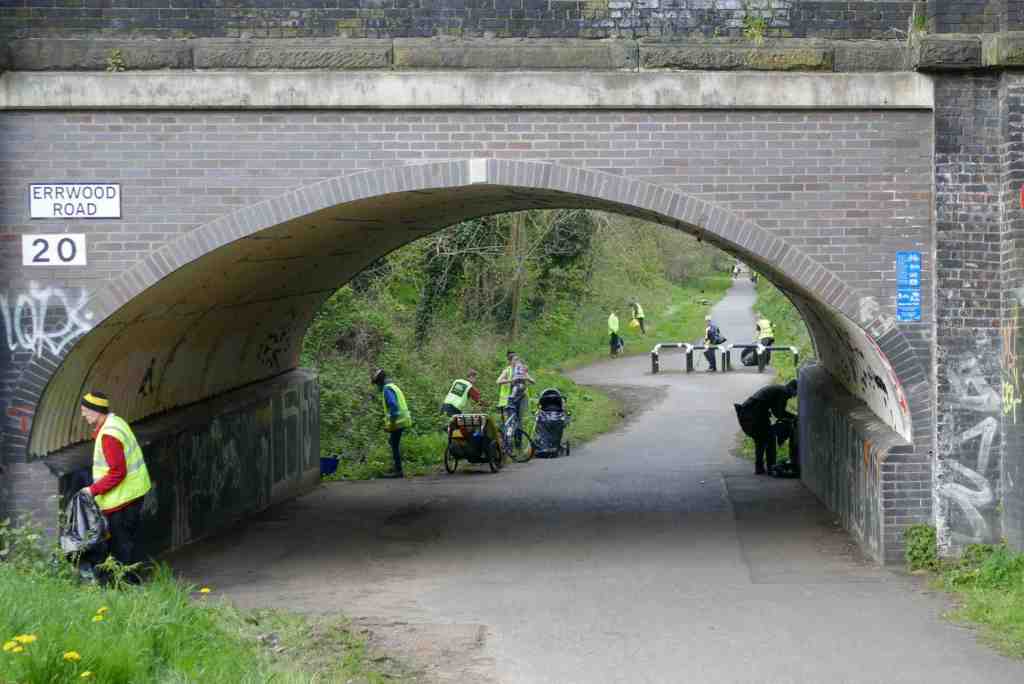
For individuals, joining the Friends is a good way of belonging to a group whose main aim is to ensure the path remains a valued and widely used asset. However, we also wish to encourage local participation in as many ways as possible and therefore would like to encourage other groups such as schools or scount/guide groups to become involved – and litter picking is a good way to do this and it has a valuable educational benefit too. If you want to know more about how groups can get involved, please contact Charles Kinniburgh (charles.kinniburgh@gmail.com) .
Safety
There have been no serious accidents or incidents while litter picking but nevertheless a few precautions should be taken:
• Be aware that the path is used by cyclists and therefore try not to switch sides more than you have to and always look before crossing the path
• Pay particular attention to protecting your face especially when reaching into bushes
• Only venture where you are comfortable doing so and have regard for your personal safety (e.g. work in pairs)
• Do not feel obliged to clear everything – fly tips and dangerous items should be left untouched and reported for others to deal with
• Do not leave valuables such as bikes unattended
The positives
There are a surprising number of benefits that you may experience as a result of joining the litter picking family. Here are some:
• a feeling of doing something useful (rather just moaning about it)
• some worthwhile exercise
• enjoyment of being in the fresh air and being surrounded by nature
• a mental health benefit by engaging your mind on ‘other things’
The commitment
There is no commitment ! You can do as much or as little as you like, when you like and how you like. It will all be appreciated.
Posted in Litter picking |
The “Blues and Gospel Train” was staged on May 7, 1964 by Granada TV. 200 fans were instructed to meet at Manchester’s Central Station at 7:30 that evening for a short train ride to the abandoned Wilbraham Road Station in Whalley Range, where a huge platform sign displaying the word ‘Chorltonville’. They had seats on the platform. The opposite platform was decorated with bales of cotton, sacks, crates, broken-down farm equipment, washtubs, wanted posters and even some farm animals.
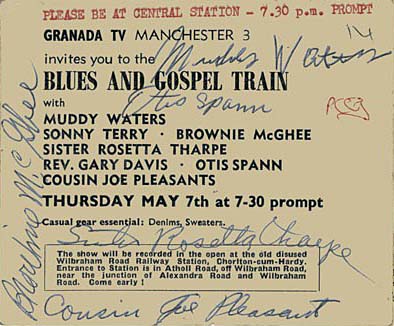
This was an offshoot of The Blues and Gospel Tour, organized by Granada TV producer Johnnie Hamp and 25-year-old TV director Phil Casson . It is regarded as massively significant in the culture and history of the blues. It was broadcast on 19th August 1964. Hamp had produced a concert on Sunday 21st October 1962 at the Free Trade Hall which was attended by Mick Jagger, Bill Wyman & Brian Jones and featured John Lee Hooker, Willie Dixon and T-Bone Walker.
There was a re-enactment by at Chorlton tram stop 7th May 2014 and coverage by the BBC of the 50th anniversary.
CP Lee, and audience member Brian Smith recalled the event in 2017.
Posted in History |
by Costel Harnasz.
Some of the long-standing members of the Friends of the Fallowfield Loop will remember Rob Trueblood. This is a brief story of the part he played in the creation of the Loop and how the Friends came into being.
I knew Rob Trueblood from sometime in the late 1970s, when our paths first crossed, both of us living in Prestwich, both of us teaching at the time. We became friends sharing an interest in local and industrial history in which maps figured greatly. We both became active in local and community politics.
One Saturday, in the mid 1990s, after popping out to the shops I came home to find a note pushed through my door. It was a note from Rob about an old railway track, ending with the capitalised words THIS IS THE BIG ONE! We arranged to meet that day and over mugs of tea, the Manchester A to Z, and the OS Explorer map spread over the kitchen table Rob explained that he had been following the route of an old railway line, on his bike, crossing over bridges, and turning into whatever roads that led to the next bridge, and so on till he emerged not far from me.

I caught his excitement, and shortly afterwards we both set off together to repeat the journey he’d made, but in the opposite direction, after finding a gap in a fence, and down to the level of the trackbed where the railway lines had once been. The cuttings were overgrown, some parts quite wet underfoot where water had pooled. Embankments covered with self seeded trees, nature at work. It was exhilarating to feel like we were bush whacking – in the city – on top of which, we had plunged into another, hidden traffic free world coexisting with the one we had been familiar with.
What happened next? Rob discovered that an organisation called Sustrans had produced a document in conjunction with Manchester City Council, for something called The Fallowfield Loop. He obtained a copy, a cartophile’s dream, full of detailed maps. We blew the dust off the report and formed an association called Two Wheels Good, and began to breath life into its pages. He created a display to take round to events where we could set up a stall and advertise the possibility of a traffic free cycle route across south Manchester. It was fantastic collaborating with Rob (a one time geography teacher) and we had maps to show schools that could be linked, parks and open spaces, train stations.
We had an aim to try and get funding in time for the Millenium celebrations of 2000. There was a lot of money around for a multitude of projects but cycling was just not on the agenda at the time and the funding didn’t emerge. But we ploughed on. Two Wheels Good became a properly constituted ‘Friends of’ body and a year later funding emerged, from a different national lottery source. The forthcoming 2002 Commonwealth Games was a driver as we offered the prospect of a traffic-free route round the city to the venue, by way of the Ashton Canal. This was picked up by the press, and also, by then so many councillors knew from our lobbying that the line of the FLoop passed through their wards.
Round this time Rob had discovered that Sustrans had a local area volunteer ranger, Dick Venes, and in 2001 the inaugural meeting of the Friends of the Fallowfield Loop took place in a bar that occupied the premises of the original Fallowfield Station, now absorbed into Sainsbury’s. It was a packed meeting, standing room only with over 35 people attending. Rob was the first chair, Dick its treasurer, and I secretary. The following year the first section of the FLoop was officially opened. The council produced, in conjunction with FotFL, the first leaflet with map. It was called The Fallowfield Loop, but a year or two later the next edition quickly appeared, called The Manchester Cycleway. I think it had been picked up by some far sighted officials in the transport department and while it seemed a shame to me that the name Fallowfield Loop had gone (at least from the cover), cycling was now, literally, on the map in Manchester. I do believe that the FLoop prompted more cycle routes appearing on roads, and it was exciting to see signs pointing to how to get to the FLoop.
Rob’s involvement with the FLoop decreased as it took on a life of its own – to this day the Friends of the FLoop remains one of the very few ‘Friends of’ an off-road cycle route in the country. He became involved with driving new projects in the north of the city. He got more and more into wildlife, the environment of natural history, continuing that strand in our early lobbying when we would refer to the FLoop as a Greenway. Rob was diagnosed with pulmonary fibrosis last year, and this year contracted complications. He died in Prestwich, at home, close to where I first bumped into him.

Posted in History | Leave a Comment »
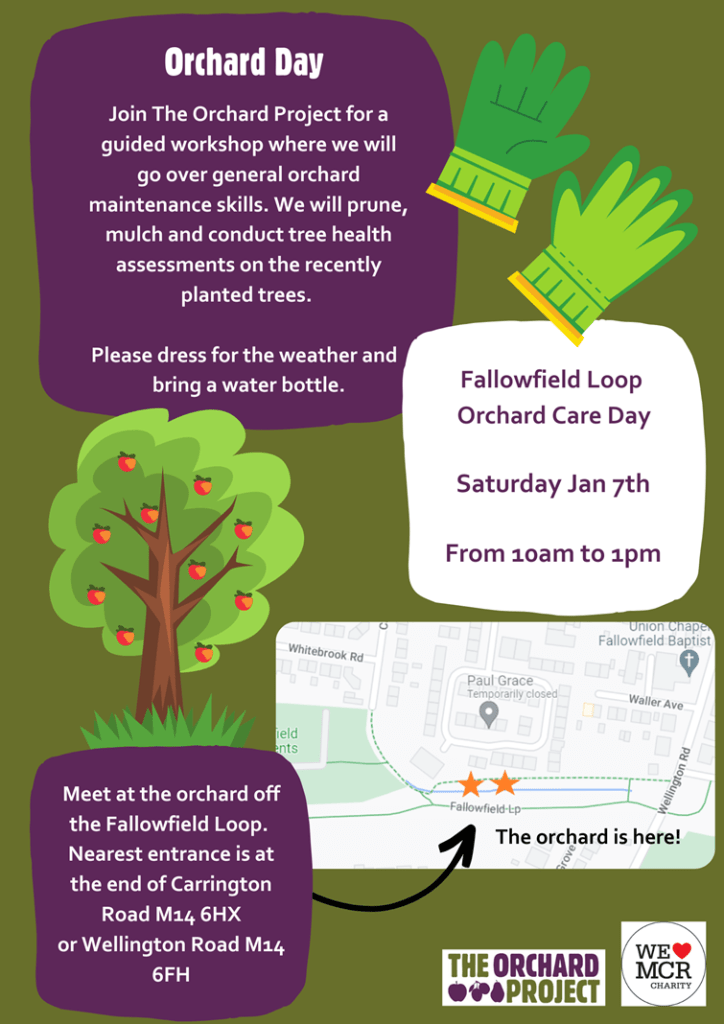
We are very sad to report the death of David Beetham, Treasurer of the Friends of the Fallowfield Loop, and former Honorary Secretary and Chair, on Monday 4 July. David was a long-standing member of the Friends and a great driving force in his many years on the Committee, with many contributions as an officer and excellent understanding of grant applications. However, it was his initiatives in the funding, planting and maintenance of our community orchards in Levenshulme, Debdale, and Fallowfield which will be remembered as his outstanding contribution. In fact his last project with us was planting the Chervil orchard in Fallowfield, which we completed only in the last couple of months.

David had a very distinguished career as a Professor of Politics at Leeds University, published several books on political systems and was still in demand as a consultant on democracy in developing countries. He served as a local Labour party councillor in Manchester in his time and latterly was a member of the Green Party.
David will be greatly missed by the Friends. We will publish details of any funeral or memorial service arrangements when they are available.
Posted in Community orchards | 1 Comment »
Route Details
Route Description
The Fallowfield Loopline is an attractive, largely traffic-free walking and cycling route which follows a former railway line. The route is a classic urban railway path, ideal for families and new cyclists who need to build up their confidence away from road traffic. It forms a green corridor running about one mile south of the city centre, linking parks and open spaces.
The Loopline connects Chorlton to Fairfield station and includes many reminders of its past as a railway line. The route begins at St Werburgh’s station in fashionable Chorlton. It runs through the thriving suburb of Levenshulme, through to Debdale Park, Gorton reservoirs and up to Fairfield station.
The Loop also connects to Route 60, which uses the in-filled canal to take you up to the Velodrome, the City Stadium and the Ashton Canal.
What we plan to do and why we want to do it
On many parts of the path, we simply seek to maintain what is there. In other sections we have identified opportunities to enhance habitats. We always aim to keep a safe and open feel to the path which sometimes requires us to undertake tree and scrub management as well as cutting grass directly adjacent to the path to prevent it from causing an obstruction. We also thin trees where it would improve the woodland health and we clear around some of the older trees to release them from the competition of younger more vigorous trees and allowing them to be fully appreciated by route users.
As you read on, you can see that the path has been split into 5 sections each with a specific focus beyond this general management. There is a brief description as to the nature and proposed management of each section.
Environmental Management Objectives
Restoring and enhancing the existing grasslands and woodlands along the route
Creating species rich habitats in suitable locations
Improving connections between habitat patches in the wider landscape
Providing suitable opportunities for nesting and hibernating wildlife
Increasing the abundance and diversity of foraging resources such as flowers, seeds, berries and insects along the route
Joining up habitats on the trail with Highfield Country Park Local Nature Reserve to encourage local wildlife to spread on to the route
Social Management Objectives
Providing volunteering opportunities for local people
Working with local businesses to manage the trail
Providing a setting which promotes and facilitates health and wellbeing
Creating a safe and welcoming environment for all
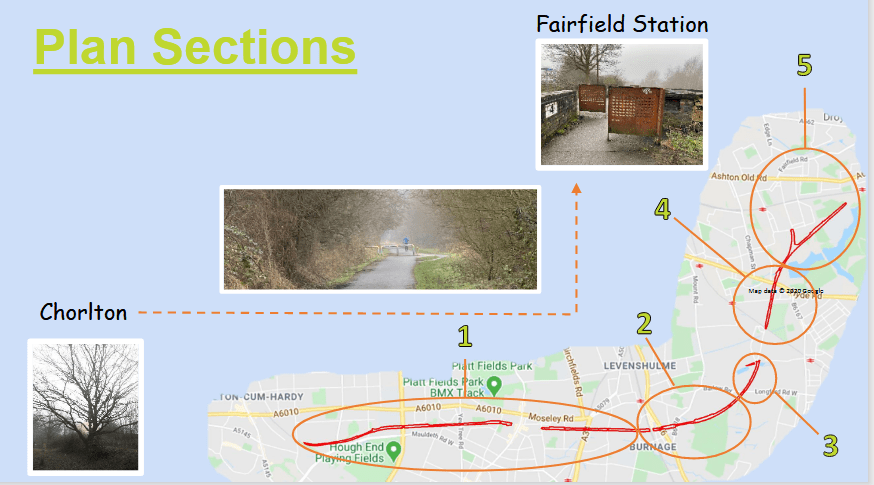
St Werbergh’s – Slade Lane
An section of path with many mature broadleaved trees, including sycamore, oak, willows and aspen. This section of path has
some issues with invasive plant species and fly-tipping
We would like to…
1/ Reduce the presence of invasive snowberry, rhododendron, spirea, and laurel and prevent any negative impacts it may have on the trail’s biodiversity or its neighbours.
2/ Clear fly-tipping and engage neighbours who deposit garden and household waste on the trail
3/ Assess and actively manage the poplar species which may grow too large for the trail.
Slade Lane to Nelstrop Road North
An open section of the path with food growing, grassland, scattered broadleaved trees and scrub
We would like to…
1/ Improve the species diversity within the grassland by implementing a traditional cutting regime and introducing new species through green hay application if required.
2/ Add to the food production in this section by planting more fruit trees.
3/ Create shallow ponds to increase the opportunities for wildlife
4/ Undertake habitat improvements on the open land adjacent to St Andrews CofE Primary School
Nelstrop Road North – Shillingford Road
A young woodland containing ash, aspen, willow and native shrubs.
We would like to…
1/ Clear the non-native invasive laurel
2/ Increase the food growing potential of the site by planting fruit trees and bushes
3/ Plant some new trees and create some shallow ponds to increase the habitat for wildlife.
Shillingford Road – Gore Brook
An open ash, cherry and willow woodland with areas of open grassland.
We would like to…
1/ Improve the species diversity within the grassland by implementing a traditional cutting regime and introducing new species through green hay application if required.
Gore Brook – Boothdale Drive
A maturing native woodland with small pockets of black poplar trees and some pond/wetland areas.
We would like to…
1/ Work with neighbours to see some coppicing of the black poplar to remove the risk of them obstructing the path in the future, and to create habitat diversity.
2/ Manage the ponds to maximise their benefits to wildlife
3/ Manage grassland and wetland between Alston Road and Green Fold
Posted in Conservation | 1 Comment »
Introduction

This is the response from the community group, The Friends of the Fallowfield Loop, to the consultation regarding the proposed improvement and development project for the Fallowfield Loop and old Stockport canal routes. The Friends of the Fallowfield Loop are a user group that was inaugurated in 2001. There are currently 130 subscribed members and the Friends host a public Facebook page that has over 1740 Subscribers. The Friends have created a multi-layered Fallowfield Loop Points of Interest google map, to which there have been almost 65,000 visits in the past 20 months.
The Friends of the Fallowfield Loop are familiar with the Stockport Canal route through both personal usage and reports by members, and because The Friends have participated in monthly “clean ups” along the route over the past 3 years.
The Friends group are involved in many aspects of the Fallowfield Loop, both independently and in partnership with other small and large organisations and groups. Activities include representing users in respect of crime and anti social behaviour, supporting the increased accessibility to a wide range of users, and engaging with small neighbourhood groups and schools. The Friends has over the past decade planted 3 orchards along the length of the Loop. The Friends have undertaken a number of Fallowfield Loop user surveys, advocated and brought about changes that have increased user accessibility on the Loop, and done a number of flora and fauna audits. The Friends have worked with Sustrans and other organisations to hold regular volunteering activities including fortnightly maintenance work (with the guidance of the Sustrans Land Manager), two litter clean-ups each month, and monthly wildlife walks (as part of the Sustrans Wildlife Champions Project). All of these activities have been suspended due to the Covid Lockdown, as has the Bike Rides Project the Friends had been planning to run over the summer of 2020 in association with Cycling UK.
The Friends have followed the process of the funding application to the GM Mayors Walking and Cycling fund with interest and are pleased to be taking part in this Consultation and hope that this submission will be appreciated as representing a wide range of views and experiences of the Fallowfield Loop and Stockport Canal routes. Once the consultation process commenced the Friends actively publicised it through the facebook page, through members’ mail outs and by putting up notices provided by Manchester City Council along both routes. A working group was set up and members fed into this group. Members were also encouraged to make their own submissions either by email or on the Commonplace map.
It is hoped that this paper is a fair summation and representation of the discussions had by members of the working party, and of the comments, views, contributions and suggestions that came to the working party from the Friends’ membership. There now follows a summary of items that The Friends have identified as being important in the development of a holistic and inclusive improvement and development plan.
1. Widening of the paths and resurfacing
There are a number of issues that need to be taken into account here: Some of the problems are caused by vegetation creeping onto the tarmac.
a) If there is an identified need for the path to be widened however does all this need to be done using a hard tarmac surface? There are bridleway paths alongside much of the Fallowfield Loop route that could be maintained as grass verge footpaths. These grass verges, provided they are managed by mowing and not chemical treatment, help to maintain the sense of countryside and the biodiversity of the route.
b) The Stockport Canal route: Much of the path is currently in a bad state particularly from tree roots, and this is bound to deteriorate further over the next few years. Also in many places, the path does need widening to accommodate cyclists and pedestrians safely, although this could be to the 2m width currently along the Loop. A survey of the path followed by remedial action should be undertaken as the top priority before any other improvements are considered.
c) A widespread concern is that, if the routes are further widened with a hard surface, there will be an increased use by motor bikes, mopeds and scrambler bikes (and newly available fast moving electric bikes and mopeds). This will result in further incidents of dangerous riding and ant-social behaviour to other route users.
d) Currently, in accordance with their Fallowfield Loop habitat management strategy, Sustrans mow the verges/bridleways at certain times in the year.
2. Maintenance
The Friends would like to see a substantial sum identified to pay for maintenance of the Routes. The maintenance of the two routes is undertaken by different bodies. There are also volunteer teams, who work under the auspices of Sustrans, who have been doing bi-monthly task mornings and monthly clear-ups and litter picks on both the Loop and Stockport Canal for the past three years.
These have been on hold because of the Covid Lockdown.
a) Fallowfield Loop maintenance — Sustrans have, within the limitations of their resources, been maintaining the Fallowfield Loop for two decades both as a cycle/walking route and a wild life corridor, with all the expertise that the organization has in respect of both these areas. There is a dedicated Sustrans maintenance team and vehicle that traverses the length of the Loop at least once a week. In addition there is a team of Sustrans volunteers that undertake twice monthly work mornings on the Loop. The work tasks are planned with the Sustrans volunteer coordinator and the Sustrans land manager. The volunteer clean-up and litter pick teams work on a section of the Loop once a month. Both of these volunteer activities have been suspended during the Covid Lockdown.
b) Stockport Canal route – Manchester City Council are responsible for the maintenance of the Stockport Canal route. We understand that they employ contractors to manage the vegetation and removal of rubbish. In addition, over the last three years there have been regular clean-ups led by volunteers which have improved the situation. Despite this, littering and fly-tipping are a
major issue and definitely puts some people off using the path.
c) One of the maintenance/safety issues that is reported to the Friends on an annual basis is the problem of wet leaves on the route during late autumn.
d) The Friends would like to see both waste bins and “dog poo” bins installed on the routes. However it is vital that the emptying of these and disposal of the waste is given to a designated authority, and that these tasks are undertaken on a regular basis. Otherwise they give rise to public health and litter problems.
3. Seats and litter bins
These should be provided at frequent intervals to encourage older people and pedestrians generally.
a) Our long experience of seating is that it encourages litter, so, although more seating is welcome, it needs a thorough plan for litter bins beside and along the route as a whole, and for who is to take responsibility for emptying them. The Loop provides a good route for dog walkers and dog poo bins (not by the seats) would also be helpful. Picnic tables could be installed in open, more public areas of the Loop, but not in more secluded places. Again with litter bins, frequently emptied.
b) There are already a set of carved animal stone seat near to the Errwood Road access point. They are set in a railway supplies bay. And we would like to see them retained on the Loop. There is also a stone statue near to the Athol Road access point that also should be retained, however it could be moved to a different location.
4. Access points
There has long been a need for improved and increased number of access points along both routes.
a) The Friends have done considerable work in the past to make the case for improving access to the Loop with some considerable success. All current formal access points, with photographs and information about accessibility are shown on the Access layer of The Fallowfield Loop Points of Interest google map.
b) There are many “unofficial” access points on both routes and, where possible, these could be made visible and accessible. At present the Loop is in many places a barrier for pedestrians. More access points would encourage pedestrian use and mean that more thought should be given to helping people to share the use of the path. Most of the road bridges over the Loop could have an access point – many already have a gate which is locked. Some would require a path through the adjacent neglected land if the access points are not to be too steep.
c) There should be proper access for all the schools along the Loop – this is a time when we are encouraging children to walk or cycle to school. At Whalley Range High School this would require a bridge over the brook. The Consultation must take into account the interests of schools in the Loop’s vicinity if there is to be an increase in pedestrian and cycle travel to schools which is a council objective – their cycle voucher scheme is undermined if no thought is put into making the Loop’s links to schools more user-friendly. The timing of the consultation has not been ideal given it has coincided with lockdown and school holidays, and school managements have had other priorities, so we suggest there should be a separate initiative from the Commonplace consultation for schools.
d) There are a number of junctions along the routes that need considerable work doing on them. The following are examples:
1. Wilmslow Road junction We would like the traffic light sequencing changed to give priority to people crossing from Ladybarn Lane to Sherwood street. At present Loop users do not appear to have any effect on the sequencing of traffic lights.
2. The junction of the Stockport Canal and the Fallowfield Loop. This is very steep and inaccessible to many users.
5. Improved signage at all access points, junctions and bridges.
There are some good examples of signage on the Fallowfield Loop however the signage on the Stockport Canal is very limited.
a) All access points and junctions should be signed both on and off the path, to say where they lead. There should be consultation about each of them. All the signs on the Loop should say Fallowfield Loop and those on the Stockport Canal should reflect the origins of this route too (even if they also say part of the Manchester Cycleway).
b) The Friends have put a lot of work into producing signage and other accessible information about the Loop. The lectern maps provided by the Friends have become unusable and we would like to see a new solution to the provision of maps and notices.
c) There is a continuing problem with reporting crime and other incidents on both routes because there are no postcodes available to tell the police where it took place. We would like to see a solution to this. It should be possible to allocate postcodes to bridges and major access points and have these recorded on the adjacent signs.
d) The routes should be signed as “off road walking and cycling routes”. There needs to be a culture of “Share with Care” promoted for all users of the routes.
6. Accessibility
The interests of disabled users should be a priority in any improvements planned for. This includes re thinking the proposal to fill in some of the bridges. One of the advantages of both routes is that, because they were previously a railway line and a canal, there is very little incline. It is important that this feature is retained. Filling in bridges would make unnecessary hills, which are problematic to wheelchair users, older cyclists and those using adapted bikes, very young cyclists and parents with buggies and others.
7. The Proposed Installation of lighting along the routes.
The Friends are aware that there is a strong lobby for the routes to be installed with street lighting. However a number of different sources have indicated that, although the installation of street lighting is the common sense solution to night cycling and increased safety for users on these routes, this may not necessarily be so. For these and other concerns raised regarding impact of night time lighting on the wildlife along the routes, we advocate a cautious approach to any promise of a fully lit up Fallowfield Loop and Stockport Canal route.
a) There is a concern that the use of the routes for crime and anti-social behaviour would increase once street lighting was installed. This is in contrast to the argument for the lighting of public streets, where there is good evidence that lighting increases public safety. It is unlikely that there would ever be enough night time users on the routes to provide a counter challenge to threatening or illegal activities. We recommend that the advice of Greater Manchester Police’s Crime Prevention Unit is sought before any plans to install street lighting on the routes are drawn up.
b) The Stockport Canal route may benefit from street type lighting in some places as it is often a narrow path passing between streets of houses, but here issues of light pollution into adjacent dwellings would need to be taken into account.
c) Another concern that has been raised by members is the negative impact of night time lighting on wildlife. This includes birds, bats insects and small mammals, all which are vital to the natural habitat food chain recorded along the Loop and important to the bio-diversity of the locality. A number of these are listed as endangered species and are protected in law.
d) We are also aware that a scheme to install lighting along the length of both routes would be very costly, and could use up a significant amount of the money available. We also ask who would pay for the ongoing cost of power and maintenance of a lighting system. Would it be Manchester City Council? We ask that value for money and sustainability assessments are undertaken
regarding the proposal to install lighting.
e) We are aware that there are a wide range of lighting solutions available, for example: Solar powered lights embedded into the route surface have been found to be less disruptive for wildlife.
8. Safety, Crime and Anti-social behaviour.
The Friends are only too aware of the problems with crime and antisocial behaviour on both routes. GMP officers have been host speakers at members meetings and as a result of Friends campaigning work with local councillors and GMP there are now improved reporting systems for crime and ASB. We are aware that PCSO’s have the Loop as a regular part of their patrol routes and we know that there has been some success in apprehending offenders. Such incidents are reported on the Friends facebook page and we always respond by encouraging the reporting of an incident to the police.
a) The Friends believe that the most effective way to combat crime and ASB is with more presence on the route both by PCSO’s and members of the public. There may also be technical solutions which could help such as restricting access by motorised bikes, and providing lighting and/or CCTV at key trouble spots, However, as mentioned above lighting may actually result in an increase in these illegal behaviours, for example continual lighting under bridges might increase drug use and sexual activity on the routes.
b) We are aware that motor bikes and motor scooters are used continually on both routes, the junction at Debdale Park being a major off-road intersection for motor bikes/scooters travelling between East and South Manchester. We are aware that there are motor bike barriers that can be installed on off-road routes; however these are also inaccessible to mobility scooters, tandems, tricycles and cargo bikes.
c) It would be helpful to have a clear and unified reporting system for incidents as the routes pass through at least 3 police districts, and also it is usually not easy to identify the location where it has taken place. See above re the suggestion of post coding locations on the routes.
9. Habitat management and the natural environment.
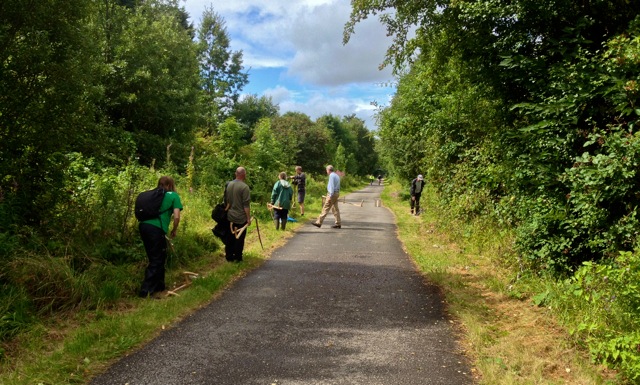
The Fallowfield Loop and Stockport Canal were previously a railway line and a canal respectively. Canal and railway routes that pass through cities are renowned for providing wildlife corridors that help maintain biodiversity in urban/city environments. The Fallowfield Loop route has since its development, always been managed as a linear greenway as well as a cycling and walking route. This has meant that over the past two decades the wildlife and natural world aspects of the route have been nurtured and celebrated.
a) The fact that the ecology and biodiversity present along the routes are not included for consideration in the consultation is of grave concern to the Friends. In fact, the list of aims seems to imply that the developments proposed will tidy up and manicure the routes, for example: “Revitalise habitat and landscape to create more open and less intimidating environment for users.” and “Reduce/clear overgrown vegetation”. The Friends have noted that the Natural Environment and Rural Communities Act 2006 Section 40 states:
a. “ Every public body must, in exercising its functions, have regard, so far as it is consistent with the proper exercise of those functions, to the purpose of conserving biodiversity”
The fact that the ecology and biodiversity present along the route are not included as consideration in the consultation could put Manchester City Council in breach of this duty. The Friends request that as part of the work done in drawing up the improvement and development plan Bio-diversity Impact assessments are undertaken. Many of the habitats and species living on the embankments of the Loop are listed as Priority habitats and species under the UK Biodiversity Action Plan. Species-rich grassland and broadleaved woodland are two such habitat examples on the Loop. Priority species living and using the Loop (both on the national and local species list) include bats (soprano and common pipistrelles plus others), hedgehog, badger, bullfinch, song thrush, flushes of orchids and other rare plants, butterfly and insects species yet to be investigated. Red and amber listed bird species of conservation concern such as house sparrow, mistle thrush and starling are also found on the Loop embankments. There are 5 areas of woodland along the Fallowfield Loop that are registered on the National Forest Inventory Woodland GB 2018.
b) In 2020 Sustrans published a draft Fallowfield Loop Habitat Plan that went out for consultation in July 2020. The Friends made a submission to this consultation and anticipate that this plan will underpin the management of the natural environment that is the Fallowfield Loop. We hope that this work will form the basis of how the natural habitat and bio-diversity along both routes are maintained and enhanced.
c) The Friends know from reports by members and from postings on the Facebook page that the opportunity that the Loop offers to be in a semi-rural environment is greatly valued as having mental health and spiritual benefits.
d) We have noted that both the Stockport Canal and the Fallowfield Loop routes are identified in Manchester City Council’s Blue and Green Infrastructure Strategy. We would expect that any developments of both routes would be linked with this strategy. Additionally we would expect that the My Wild City initiative being delivered in partnership with the Lancashire, Manchester and North Merseyside Wildlife Trusts would be linked to any proposed developments.
e) Working in partnership with the GM RIGS Group of the Manchester Geological Society The Friends submitted an application for the length of the Loop between Ladybarn Lane and Slade Lane access point to be designated as a Regionally Important Geodiversity Site. This designation awarded in 2019 and is listed as The Fallowfield Loop Cutting. A submission regarding this has been sent to the Fallowfield Loop consultation by Dr Christine Arkwright: The Secretary, GMRIGS. The Friends ask that in respect of any work proposed in the area of the Fallowfield Loop Cutting that the requests made by Dr Arkwright are noted, also that the Sustrans Land Manager is also informed. The Friends note that in Section 4 of the Manchester Green Infrastructure Technical Report there is a detailed description of the Bedrock geology, Superficial geology and Landform underlying the City Of
Manchester. The Fallowfield Loop Cutting offers an excellent opportunity as a resource for formal and informal education in respect of the geology of Manchester.
f) The Friends have created and maintained 3 orchards along the Loop and expect that they would be consulted if it is planned to plant any more fruit trees along the route. The Friends hold significant knowledge and experience of this work along the route and can advise as to location, types and management etc.
10. The social history and cultural value of the Fallowfield Loop and Stockport Canal.
The pathways of both of these routes were laid out in the industrial past of Manchester. They also pass through various communities of the city and hold multi layered information about how the city and the life of the citizens have changed over past centuries. The routes provide an accessible and invaluable record of many features of Manchester’s past and The Friends believe that this knowledge should be recorded visibly and factually along each route wherever possible.
a) The Friends have collated much of this knowledge in respect of the Fallowfield Loop line and the Manchester and Stockport Canal society likewise hold a treasury of information regarding the Stockport Canal route. The Friends have included layers on the Fallowfield Loop Points of Interest google map that documents places of historic interest and also specifically the Fallowfield Loop Railway line. In this respect much of the material has come from The Fallowfield Line (2001) Eddie Johnson,
b) The routes also both connect to other locations of Cultural and Historic aspects of Manchester’s past, for example the Thirlemere reservoir and the Nico Ditch and other features identified on the Gorton Heritage Trail.
Conclusion
The Friends welcome this funding award for these off road routes and hope that the development will be a pioneering example of how the City of Manchester is working to achieve the target of achieving a zero carbon goal by 2038. In making our submission to the consultation we recognise that these well established routes have, over the years, developed their own identity and meaning to individuals and communities each section having its own discrete ecosystem and patterns of use.
There is no single vision, as yet, of what the outcome of this improvement and development project should bring. There are many for whom the routes are primarily an off-road pathway for getting from one place to another, for others it is this – plus doing so in a green/countryside like environment – for others the routes are off-road places for leisure walking, dog walking, sport, and social enjoyment, for being alone and for being with others. There are other people and communities that stress the importance of the routes as wildlife habitats and as offering natural environment havens within a highly urbanised environment. Any effective plan will need to work at a micro-level. Lighting for instance is not something desirable for the whole Loop, but may be more suitable in some small sections.
The Friends recognise that there is a careful balancing act that the project needs to manage between the conflicting interests of increasing the accessibility and use of the routes and, at the same time, preserving its natural environment for the benefit of wildlife and for the enjoyment of the communities who benefit from this. No-one is acknowledging it is easy, but this issue is central to the long-term success and sustainability of the routes.
Posted in Improvements |
We were very pleased that the staff at Sainsbury’s in Fallowfield chose the Friends to be the community group that they worked with as part of the Sainsbury’s 150th birthday celebrations! We agreed three volunteering activities to carry out with the staff:
Posted in Litter picking, Volunteering |




 Friends of the Fallowfield Loop